The Bell Below the Landing
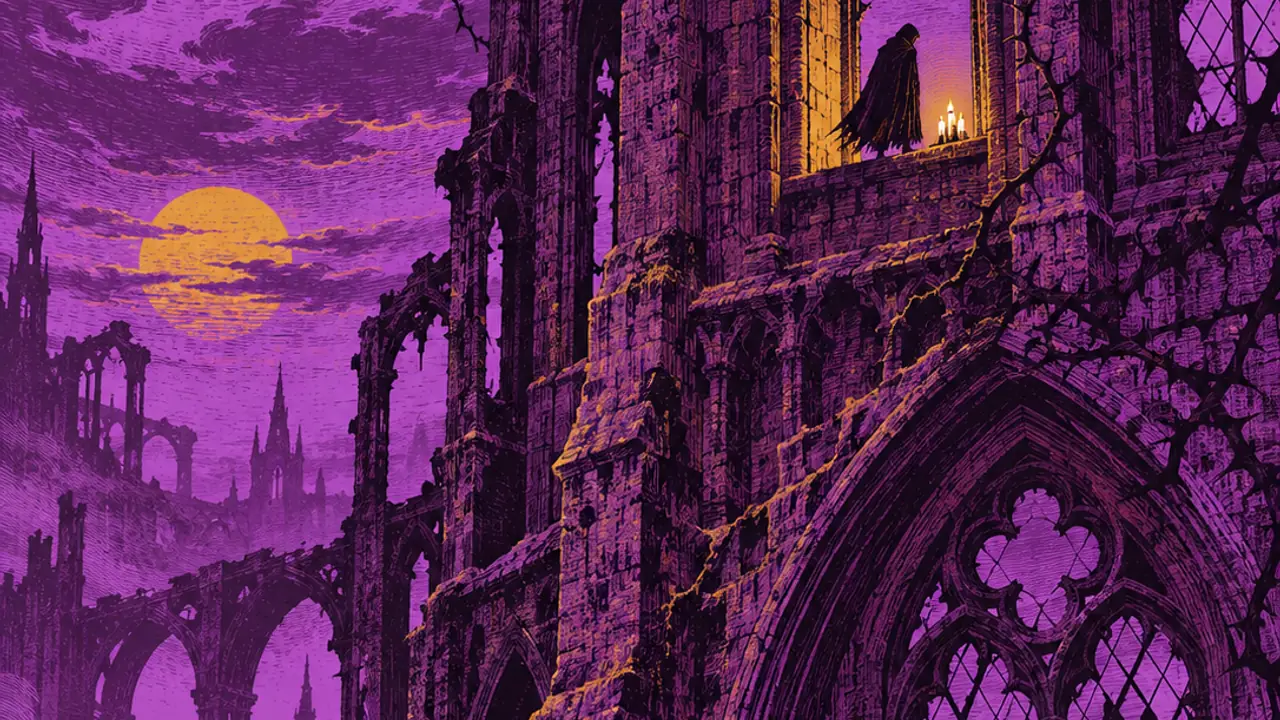
The Bell Below the Landing is a gothic fantasy concept about a cursed knight ascending an unfamiliar cathedral. The first floor has a sheltered stair and a candle in a wall niche. On the next level, a bell can be heard from across a shaft even when the way to it is closed. The knight must decide where to wait for the next signal and how to recover a route that may look different on the descent.
What the knight can hear
A bell has a distinct rhythm that identifies the next phase of the climb. The sound can cross the shaft and reach both staircases. It should tell a listener that the bell rang without making its direction seem equally reliable in every place. From the candle niche, the near arch changes when a particular rhythm is heard. At the cracked window, an echo can make the far opening seem closer than its route.
What the knight can see
Use a small movement in a rail, a lighter edge between two stones, and a caption giving the phase of access. Those cues remain available to someone playing without sound. A steady image after the signal shows the changed step. The player can look back across the shaft to compare the two arches before committing to the climb.
Advance to the next sighting
Choose a landing, listen for the signal and observe which passage it changes. Decide whether to take the new opening or remain at the landing while a different view becomes available. Each move spends a turn in the rhythm. It is possible to advance a long way without revisiting an old place, but that can leave the knight with fewer recognizable landmarks on the way back.
The first loop links three heights of the spire. The lower stair teaches the rhythm, the next ledge reveals which arch the noise reached, and the bell chamber identifies a place to stop before descending. The ascent record keeps those observations side by side. A player who waits at the wrong height can still use the next signal to recover a route, provided an available landing remains visible from where they stand.
Art and the first prototype
Stone appears violet at the end of a passage and moves toward black in the shaft. Gold catches the edges of openings the viewer can examine. Keep nearby handrails and distant windows distinct in silhouette. One strong patch of light should clarify a place, not make every feature around it disappear. A slower camera can add atmosphere, while reduced motion keeps the beginning and end of each change as legible still views.
The concept is at prototype planning stage. A first session will compare two rhythm signals at the same landing and ask which change the player expected after each one. A later test will show the new route from a lower and upper view. The goal is to tell which cue clarifies access and which merely draws the eye. Debt of the Quiet Nave examines decisions that affect the descent after a rest. The Ascents index places the two route records together.